
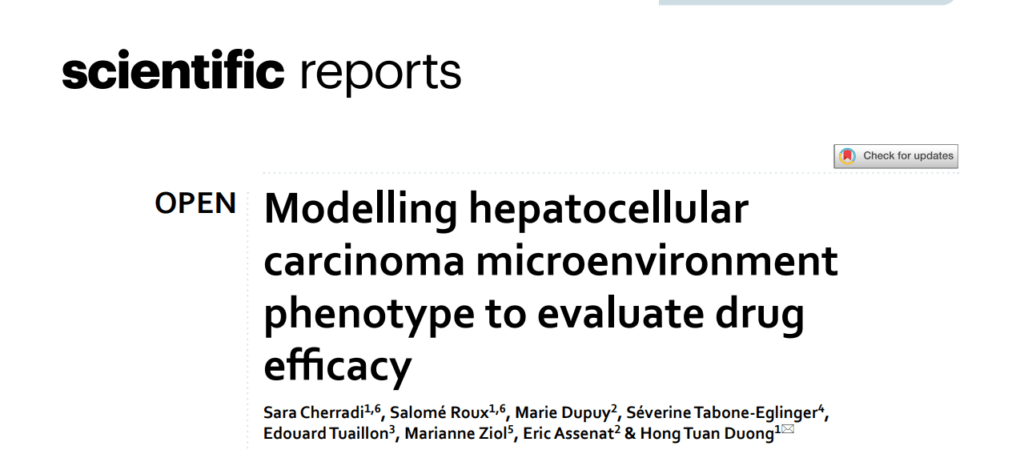
PredictCan Biotechnologies has published a study in Scientific Reports demonstrating the ability of its patient-centric liver cancer models to reproduce key characteristics of hepatocellular carcinoma (HCC) and predict individual responses to anticancer therapies.
Conducted in collaboration with clinical and research partners in Montpellier, Lyon and Paris, the study provides an important validation of PredictCan’s Cell Educating Technology™ for preclinical drug efficacy assessment and precision oncology.
Reproducing Patient-Specific Tumor Biology
Cancer is not a single biological state. Tumor characteristics, disease stage and molecular profiles vary considerably between patients and can influence therapeutic response.
Using serum collected from HCC patients, PredictCan generated patient-derived serum-educated spheroids and demonstrated that these models reproduce important features of HCC biology.
Notably, the models reflected molecular patterns associated with the Barcelona Clinic Liver Cancer (BCLC) classification and displayed patient-dependent alterations in epigenetic regulators, demonstrating their ability to preserve biologically meaningful differences between patients.
Separating Anticancer Efficacy From Non-Specific Toxicity
A major challenge when evaluating anticancer candidates in vitro is distinguishing genuine tumor-specific efficacy from cell killing caused simply by high drug concentrations.
To address this limitation, PredictCan developed its Target-Independent Cell Killing (TICK) exclusion strategy.
Healthy individual-centric spheroids are first used to establish the concentration at which a compound begins producing non-specific cell killing. This threshold is then incorporated into the evaluation of the compound in patient-specific cancer models, helping distinguish meaningful anticancer efficacy from non-specific toxicity.
Predicting Clinical Treatment Response
The most important validation came from comparing in vitro predictions with actual clinical outcomes.
Across 37 clinical treatment cases from 32 HCC patients, PredictCan’s patient-centric models correctly predicted 34 treatment outcomes for tyrosine kinase inhibitors including sorafenib, cabozantinib and lenvatinib.
These results demonstrate that the platform can capture not only differences between drugs, but also differences in therapeutic response between individual patients.
Bringing Patient Diversity Into Preclinical Oncology
For drug developers, this creates a new opportunity to evaluate an anticancer candidate not against one standardized tumor model, but across a cohort of different patient-specific biological backgrounds.
Combined with TICK exclusion, this approach could help determine whether an investigational compound demonstrates meaningful anticancer efficacy, characterize the proportion and profiles of patients likely to respond, and compare therapeutic candidates earlier in development.
The study provides the scientific foundation for PredictCan’s broader ambition in oncology: bringing patient heterogeneity into preclinical decision-making to support better compound selection and more predictive drug development.


