
DishTrial4LiverTox™
Our service for DILI prediction
A seamless four-step workflow for predictive DILI assessment
STEP 1
Design
Your
Human Cohort
Define the
population
you want to evaluate
Select the characteristics of your study cohort based on your development needs. Choose the number of donors and customize the population by sex, age, and physiological status (e.g., healthy or disease-specific, if applicable)
STEP 2
Evaluate
Your
Compound
Submit your investigational compound for confidential testing
Using our proprietary PredictCan-MPS™ platform, we perform a population-representative cohort « trial-in-a-dish », exposing personalized phenotypic liver models to your compound under standardized experimental conditions.
Throughout the study, your intellectual property remains fully protected under strict confidentiality agreements.
STEP 3
Generation Of Individual-Centric Data
Receive a detailed comprehensive experimental dataset
Depending on your study design, the dataset may include:
- Cell viability
- Liver function endpoints measurements ( bilirubin, ALT, AST, albumin…etc.)
- Individual donor responses
The complete dataset is delivered to your team for independent analysis or downstream integration.
STEP 4
Data Analysis Using
PredictCan-MIND™
Turn Data
into
Confident Decisions
Personalized data generated by PredictCan-MPS are subsequently integrated into our proprietary PredictCan-MIND algorithm to provide a comprehensive assessment of the compound’s overall DILI risk, combining both severity and incidence metrics. By benchmarking the compound’s profile against a panel of well-characterized DILI reference drugs, PredictCan-MIND contextualizes the observed risk within an established clinical and pharmacological landscape. This comparative approach transforms complex experimental findings into an interpretable risk profile, enabling a more informed assessment of how a newly developed drug may compare with known hepatotoxic compounds and supporting earlier, evidence-based decisions on its safety and development potential.
From Scientific Validation to Your Drug Development
DishTrial4LiverTox™ builds on years of research and experimental validation of PredictCan’s individual-centric approach. Our scientific studies demonstrate the ability of our technology to reproduce interindividual variability, distinguish different levels of DILI risk, and identify individuals with increased susceptibility to DILI.
This scientific foundation gives our team the expertise to support your compound from toxicity assessment to deeper mechanistic investigation, turning complex individual responses into meaningful insights for drug development.
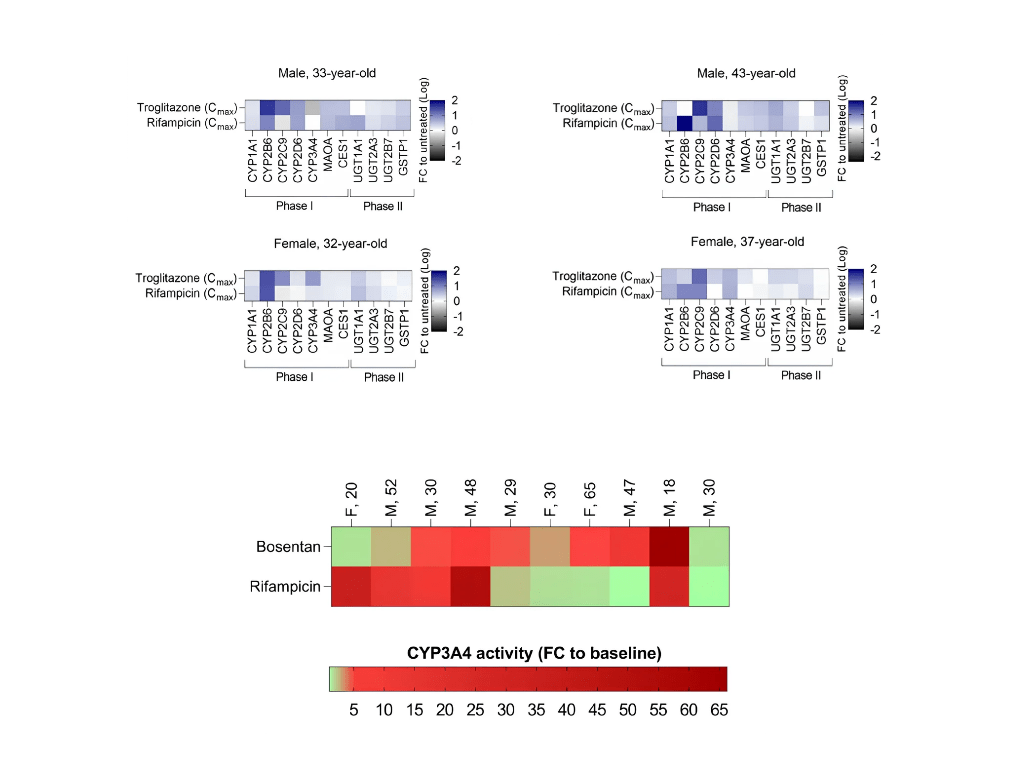
Capturing Interindividual Variability in CYP Induction and Activity
We capture interindividual variability in hepatic drug response by generating donor-specific liver spheroids conditioned with human serum from individual donors.
By incorporating donor-specific serum into our Liver hSES™ model, we
drive a more personalized and functional hepatocyte-like phenotype
that reflects the biological diversity observed across individuals.
This approach enables the characterization of donor-dependent
differences in phase 1 and phase 2 drug-metabolizing enzyme expression
and CYP activity, providing a more physiologically relevant view of
hepatic drug response.
Rather than relying on a single standardized liver model, our platform
reveals how the same compound can elicit distinct metabolic responses
across individuals. This comparative approach helps identify
variability in CYP induction and activity that may influence drug
exposure, metabolism, and ultimately susceptibility to drug-induced
liver injury (DILI).
The result is a patient-relevant assessment of metabolic variability,
enabling the identification of potentially susceptible populations,
the characterization of interindividual differences in drug response,
and a more informed evaluation of DILI risk.
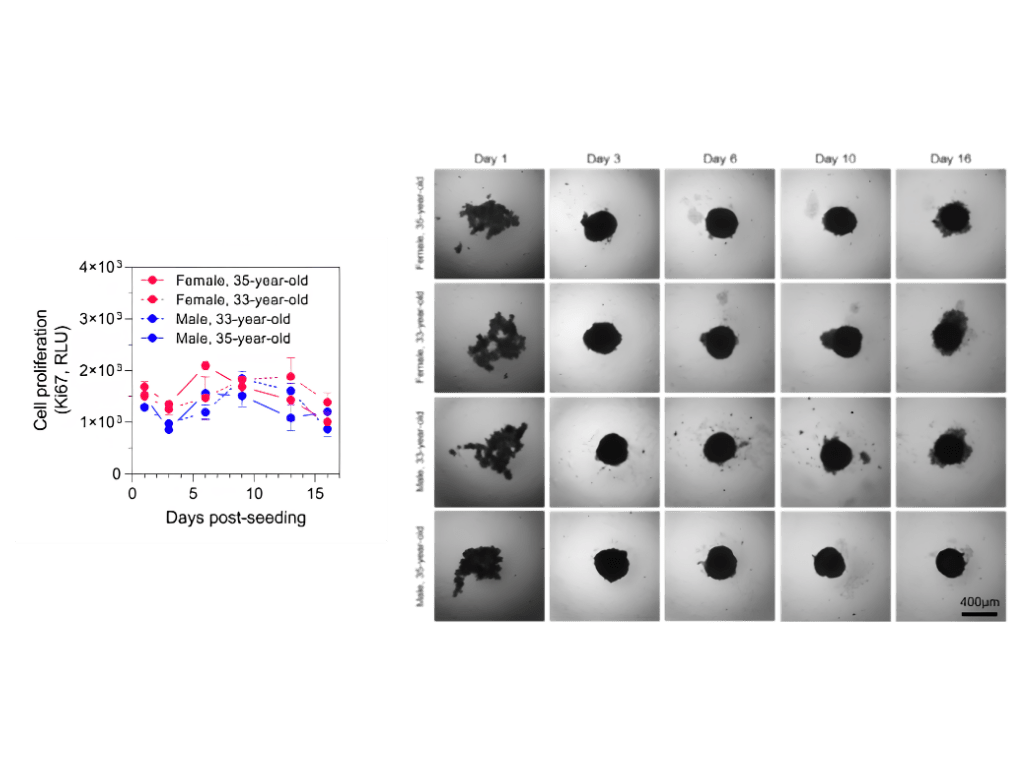
Controlled Growth and Long-Term Stability Enable Reliable Liver Safety Studies
Long-term safety assessment requires tight control of model growth and structural stability.
Our Liver hSES™ model rapidly forms compact and organized
multicellular spheroids within three days and subsequently maintains a
stable architecture and controlled proliferative state for nearly two
weeks, without uncontrolled growth or expansion.
This sustained stability provides a robust foundation for long-term
and repeated-dose toxicity studies, allowing observed changes in
cellular and molecular endpoints to be attributed more confidently to
compound exposure rather than spontaneous changes in the model itself.
By combining rapid spheroid formation with prolonged structural and
proliferative stability, our platform supports reproducible,
longitudinal assessment of hepatic responses under repeated exposure
conditions.
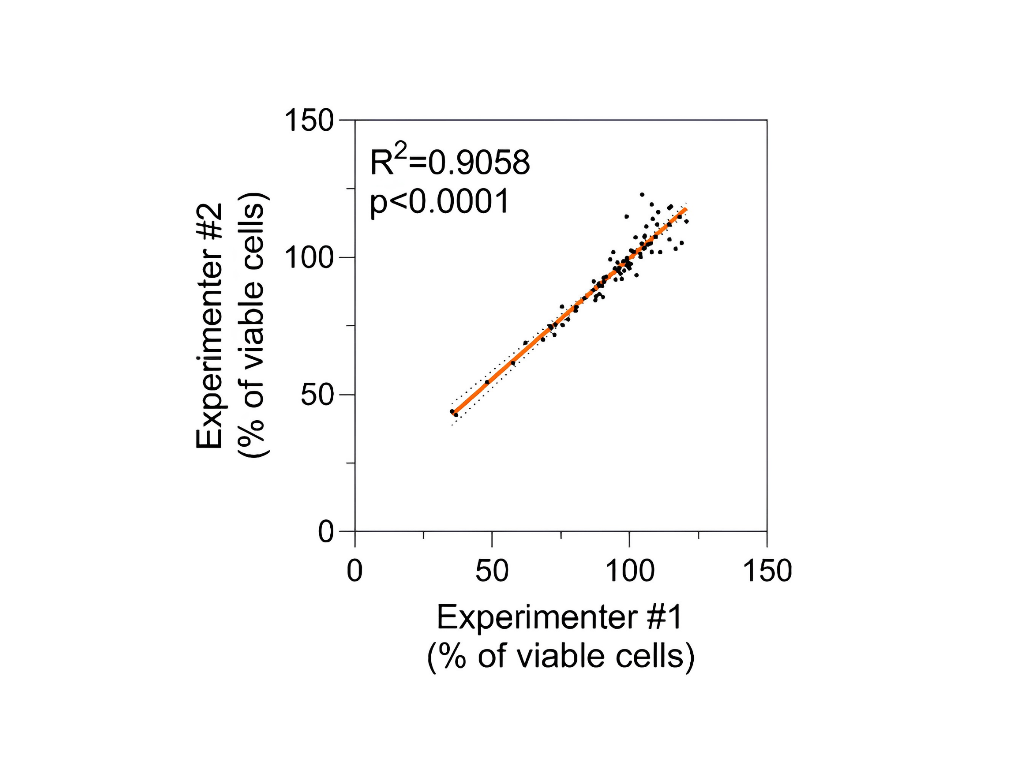
High Reproducibility Across Independent Experiments and Users
A predictive DILI platform must deliver consistent and reproducible results across independent experiments and users.
Our Liver hSES™ model demonstrates highly consistent results across
independent experiments performed by different experimenters on
different days, using the same compounds, serum, and cell batches.
This consistency highlights the robustness of the platform and the
reliability of its biological readouts.
By demonstrating reproducibility across independent experimental runs,
our platform provides confidence that its measurements can be reliably
reproduced and compared over time.
The result is a robust, reproducible, and decision-ready DILI platform,
providing the reliability needed to support confident compound
characterization and data-driven decisions throughout drug
development.
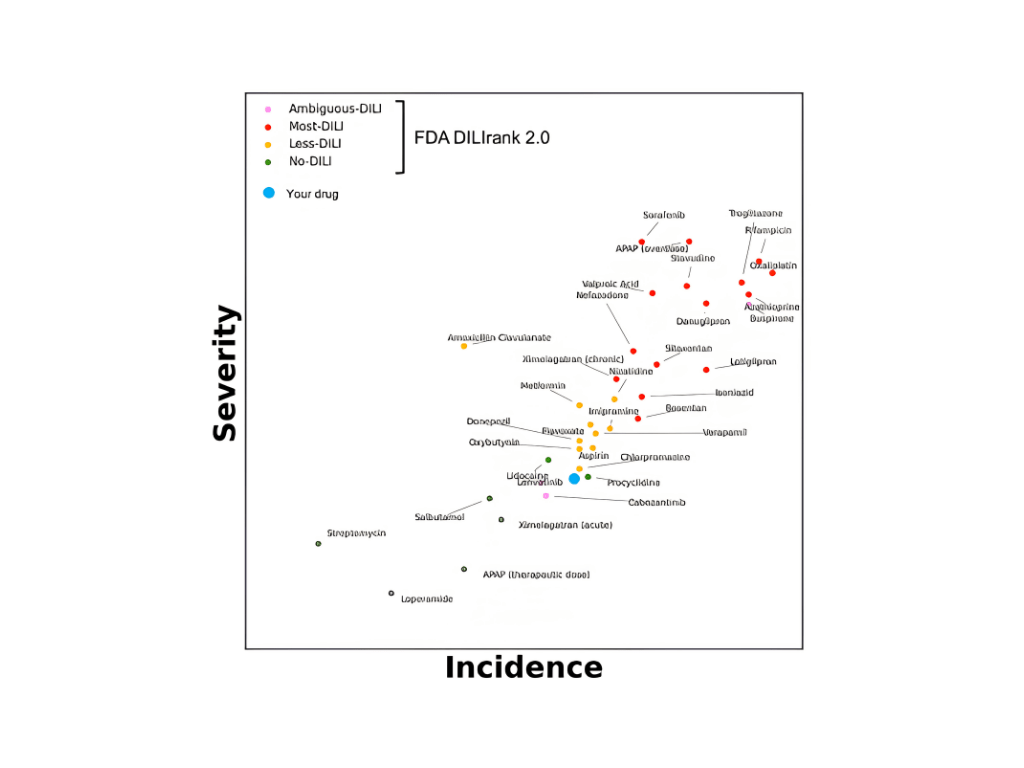
Benchmarking Against Reference Compounds Enables DILI Risk Classification
We place your molecule within a clinically relevant DILI risk framework by benchmarking its profile against reference compounds.
By positioning your drug on a reference DILI map, we contextualize its
observed biological profile relative to compounds spanning different
levels of clinical DILI risk. This comparative approach helps
determine whether your molecule behaves more like compounds associated
with a lower, intermediate, or higher DILI concern.
Rather than interpreting experimental findings in isolation,
reference-compound benchmarking connects your molecule’s in vitro
safety profile to patterns observed across clinically characterized
drugs.
The result is a contextualized and actionable DILI risk
classification, helping identify potential liabilities early,
prioritize follow-up investigations, and support data-driven
development decisions.
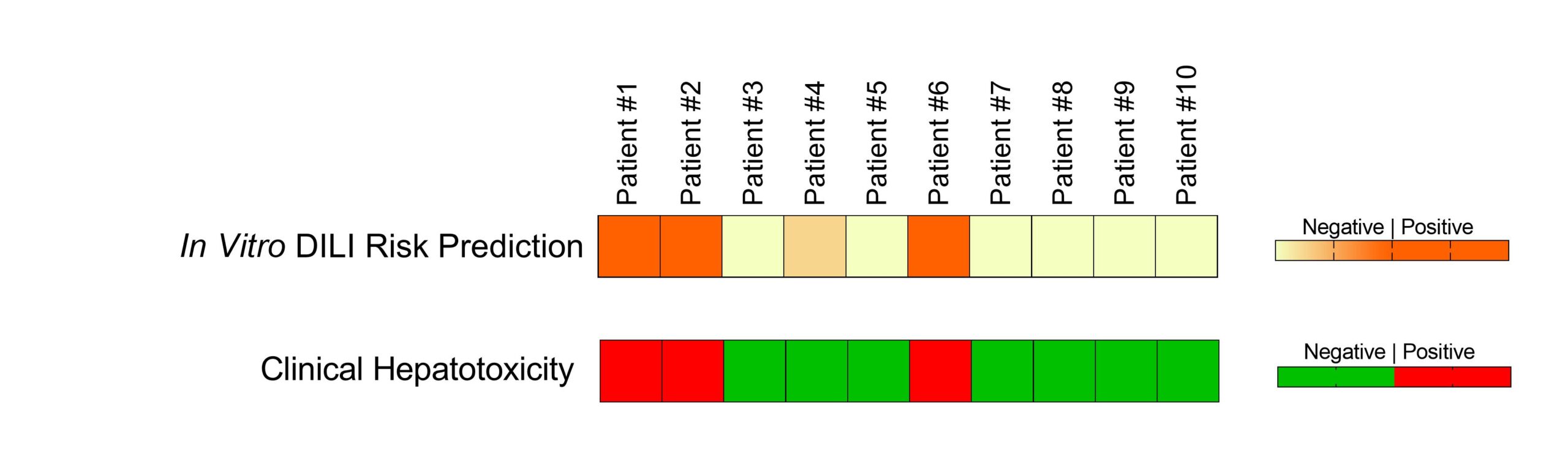
Personalized Liver Spheroids Enable Patient-Specific DILI Risk Prediction
DILI risk scoring in personalized liver spheroids provides a patient-specific approach to identifying clinically relevant liver toxicity.
Using a small blood serum sample collected from patients before
initiation of clinical treatment, we generate personalized liver
spheroids that recapitulate key patient-specific characteristics.
These models can then be exposed to the drug of interest in vitro,
enabling assessment of the patient’s individual susceptibility to
drug-induced liver injury.
Importantly, the resulting in vitro DILI risk profiles show a striking
concordance with liver toxicity observed clinically. Patients whose
personalized spheroids display a high-risk response correspond to
patients experiencing clinical liver toxicity, while lower-risk
profiles are consistent with better hepatic tolerance.
This patient-matched approach creates a direct bridge between in vitro
liver response and real-world clinical outcome, supporting the
identification of susceptible patients and more personalized
prediction of DILI risk.
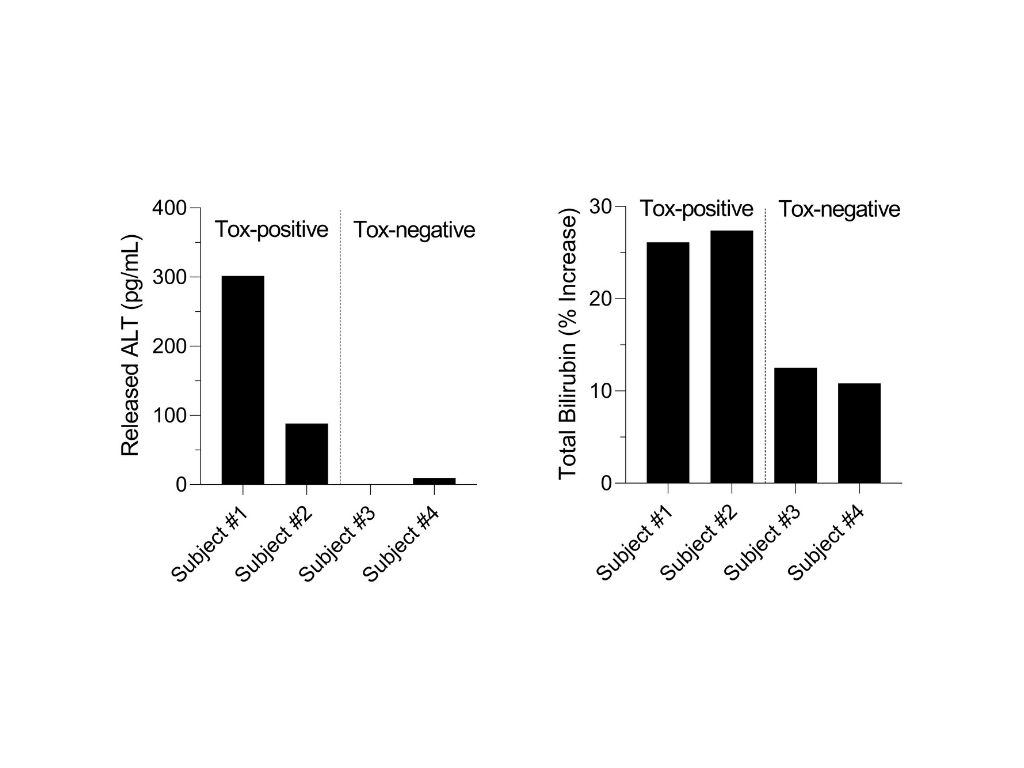
Comprehensive Measurement of Hepatotoxicity Biomarkers
A multidimensional assessment of liver toxicity through complementary cellular injury and functional biomarkers.
The platform enables measurement of key hepatotoxicity biomarkers,
including ALT release and total bilirubin. ALT provides a sensitive
readout of hepatocellular injury, while total bilirubin provides
complementary information on hepatic functional impairment.
These parameters can be quantified in individual Tox-positive and
Tox-negative subjects, providing an additional layer of biological
characterization alongside the overall DILI risk score.
Rather than relying on a single endpoint, the platform captures
distinct and complementary manifestations of hepatotoxicity, enabling
richer characterization of drug-induced liver responses and subtle
differences in toxicity profiles between individuals.